
Hi, I’m Captain!
This time, alongside my usual monthly ekiben review, I finally picked up a sweet I’d been eyeing for ages!
Every time I pass through Shin-Osaka Station’s Shinkansen gates, this fruit daifuku shop catches my eye — but I always had just enough time to make my train and nothing more. This time, I made it happen! 🎉
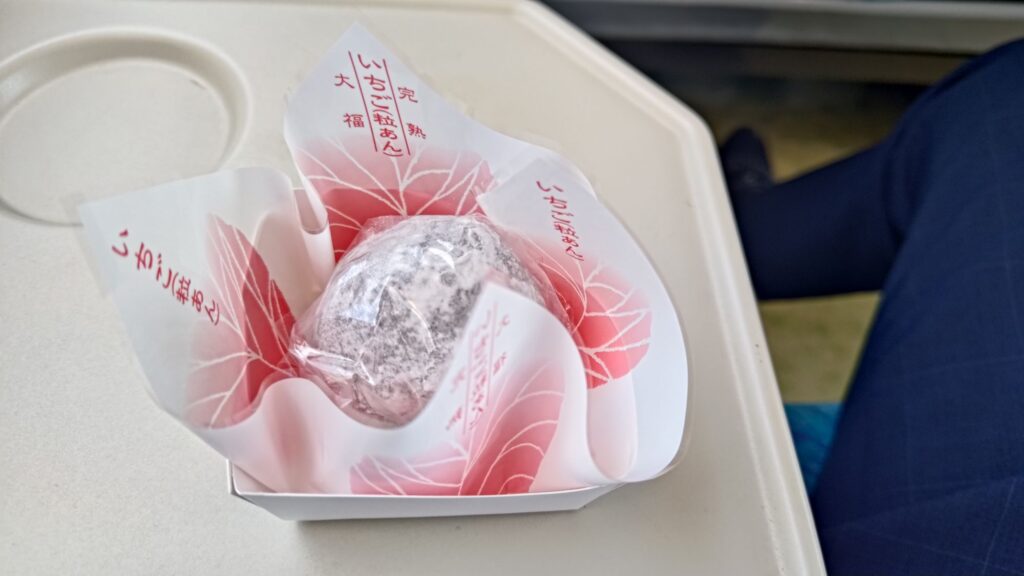
Table of Contents
- What is Issindo?
- The Packaging Alone is Worth a Look!
- What’s Inside the Strawberry Daifuku?
- Taste Test!
- Final Verdict & What’s Next
What is Issindo?
Today’s treat comes from Issindo (一心堂) — a long-established Japanese confectionery shop based in Sakai City, Osaka Prefecture.
🍡 Quick Japanese Sweets Glossary for First-Timers
- Daifuku (大福) — A type of wagashi (traditional Japanese sweet) made of soft mochi (glutinous rice cake) filled with sweet bean paste. One of Japan’s most popular confections.
- Mochi (もち) — Glutinous rice cake with a soft, chewy, stretchy texture. Used in many Japanese sweets and dishes.
- Gyuhi (求肥) — A refined type of mochi skin made from glutinous rice flour and sugar, softer and more delicate than regular mochi. Used as the outer layer of premium daifuku.
- Tsubuan (粒あん) — Chunky red bean paste made from azuki beans, with the bean skins left intact for texture. Distinct from “koshian,” which is smooth and sieved.
- Wagashi (和菓子) — Traditional Japanese confections, often made with rice, bean paste, and seasonal ingredients. Typically enjoyed with green tea.
- Katakuriko (片栗粉) — Potato starch dusted on the outside of daifuku to prevent sticking and give a powdery finish.
Issindo sells their daifuku inside the Shinkansen gates at Shin-Osaka Station — so you can grab one right before boarding your bullet train. Convenient, but dangerously tempting! 😄
Issindo — Basic Information
- Full Name: 御菓子司 (有)一心堂 (Okashitsukasa Issindo)
- Head Office: 19-7 Hiokishohara-ji-cho, Higashi-ku, Sakai City, Osaka
- TEL: 072-285-6798
- Web: http://www.issindo-osaka.com
- Shin-Osaka Station: Available inside the Shinkansen ticket gates
The lineup isn’t just strawberry — they carry multiple fruit daifuku varieties including pineapple, mango, and more. Standing in front of the display case trying to choose? Genuinely difficult. 😂
The Packaging Alone is Worth a Look!
Before we even get to the taste — the packaging at Issindo is something special.
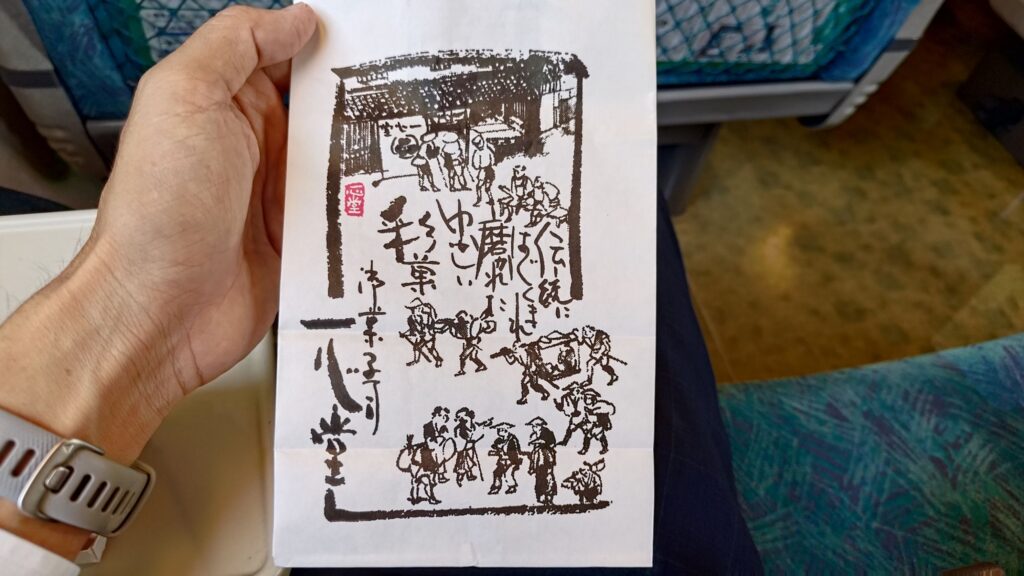
Each individual daifuku comes wrapped in a bag featuring hand-printed woodblock-style ink artwork — characters from Edo-period (17th–19th century) townspeople culture, paired with elegant calligraphy brushwork.
What’s even more fun: each bag has a different design. If you buy two, you get two different pieces of art. There’s a quiet collector’s joy to it.
The outer packaging is a beautiful flower-shaped wrapper that opens like petals to reveal the daifuku inside. Just placing it on your tray table in the Shinkansen makes you feel like you’re travelling in style. This level of presentation is rare for a station sweet.
The ink art style on the bags draws from Edo-period woodblock printing (ukiyo-e), a traditional Japanese art form that flourished between the 17th and 19th centuries. It’s a thoughtful nod to Japanese cultural heritage — and a charming reminder that even everyday sweets can carry a sense of history.
What’s Inside the Strawberry Daifuku?
This time I went with the classic: “Kanzyuku Ichigo Tsubuan Daifuku” — the Fully-Ripe Strawberry & Chunky Red Bean Daifuku.
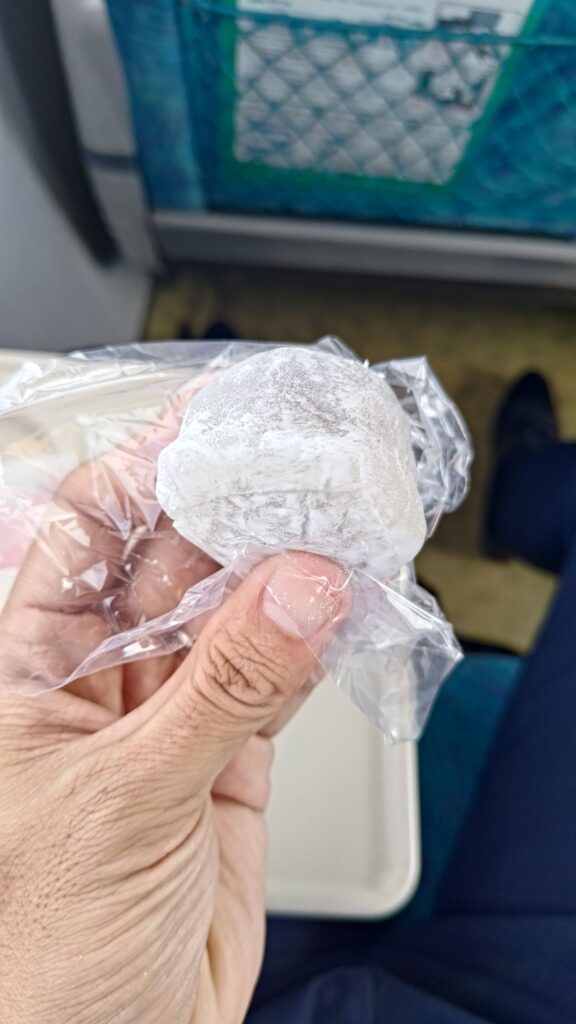
A snow-white ball dusted in potato starch — the classic daifuku look. Deceptively simple on the outside, but that’s part of the charm.
Fully-Ripe Strawberry Daifuku — Product Details
- Product Name: Kanzyuku Ichigo Tsubuan Daifuku (完熟いちご粒あん大福)
- Shop: Issindo (御菓子司 一心堂)
- Price: ¥400 (tax included)
- Contents: Gyuhi (soft mochi skin), tsubuan (chunky red bean paste), fully-ripe strawberry
Taste Test!
Itadakimasu! (いただきます — “Let’s eat!” in Japanese 🍽️)
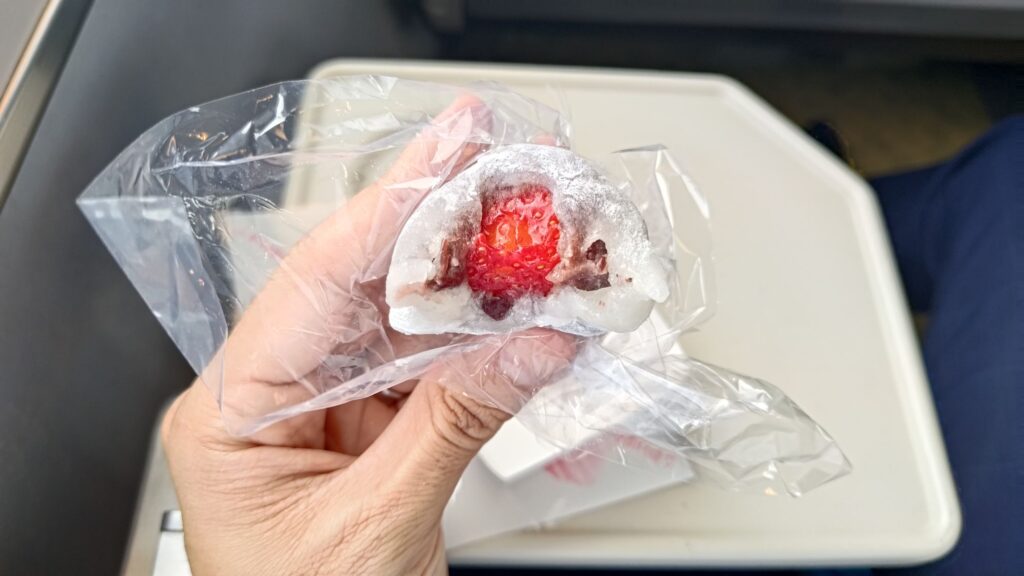
One bite in, and a vivid red strawberry appears from inside!
The gyuhi (mochi skin) is wonderfully soft — not chewy or tough at all. The tsubuan red bean paste provides a gentle sweetness, and the fully-ripe strawberry delivers natural fruity flavour with less sharpness than you might expect. It’s a milder, more mellow strawberry experience.
Honestly though? My verdict is: “It’s perfectly nice.”
That might sound like faint praise — and it is, a little. At ¥400 for one piece, I found myself wondering whether it’s meaningfully better than the ichigo daifuku you’d find at a convenience store for a fraction of the price. The answer is probably yes, but you’d need to eat them side by side to be sure. The sourness is notably lower, and the quality of the mochi skin is clearly better — but that ¥400 price tag does raise the bar quite high.
For context: Japanese convenience stores (konbini) like 7-Eleven and FamilyMart sell their own ichigo daifuku for around ¥100–150. At ¥400, Issindo is priced in a different category entirely — think artisan confectionery rather than everyday snack. Whether that gap in price matches the gap in quality is a question worth exploring with a proper side-by-side comparison!
Final Verdict & What’s Next
That was the Issindo Fully-Ripe Strawberry Daifuku. Here’s my scorecard:
・ Taste ★★★☆☆ (3.0) ”Perfectly nice — but hard to tell apart from a convenience store version without a direct comparison”
・ Satisfaction ★★★☆☆ (3.0) ”As strawberry daifuku go, it’s solidly average”
・ Packaging ★★★★☆ (4.0) ”The ink art bags and flower wrapper are genuinely beautiful”
・ Ease of Eating ★★★☆☆ (3.0) ”Soft gyuhi makes it easy to eat in one or two bites”
・ Value for Price ★★☆☆☆ (2.0) ”¥400 is steep — one more standout quality would seal the deal”
Total: 15 points / 25
The taste rating may be modest — but the packaging and presentation are genuinely excellent. As an elegant train snack or a small gift to bring back from Osaka, it holds its own. The experience of unwrapping those ink-art bags while riding the Shinkansen is a small but real pleasure.
And here’s what I’m planning next:
I’m a huge pineapple fan — so next time, I’m going straight for the Pineapple Daifuku. 🍍 With so many fruit varieties in the lineup, I’ve essentially given myself a mission to work through the whole collection. Stay tuned!
📍 Where to Buy
- Shop: Issindo (一心堂) — available inside the Shinkansen gates at Shin-Osaka Station
- You need a valid Shinkansen ticket to pass through the gates and reach the shop.
- Multiple fruit daifuku varieties available — strawberry, pineapple, mango and more.
- Price: ¥400 per piece (tax included)
See you in the next review! 👋

コメント